Breaking
Loading...
Menu
Showing posts with label Analysis. Show all posts

Tuesday, December 2, 2025

China’s Grey-Zone Tactics Are Reshaping the South China Sea

China’s Grey-Zone Tactics Are Reshaping the South China Sea

Over the past two decades, Southeast Asia has faced a conflict that is no longer overt but has left behind a trail of escalating tensions.


Over the past two decades, Southeast Asia has faced a conflict that is no longer overt but has left behind a trail of escalating tensions. These tensions stem from actions that fall into a “gray zone,” carried out gradually and systematically. This strategy has been used by China as a key instrument in expanding its territorial claims without having to fire a single shot or wage war in the South China Sea. The grey zone has become one of the most decisive dynamics in shaping the new security landscape in the Indo-Pacific.

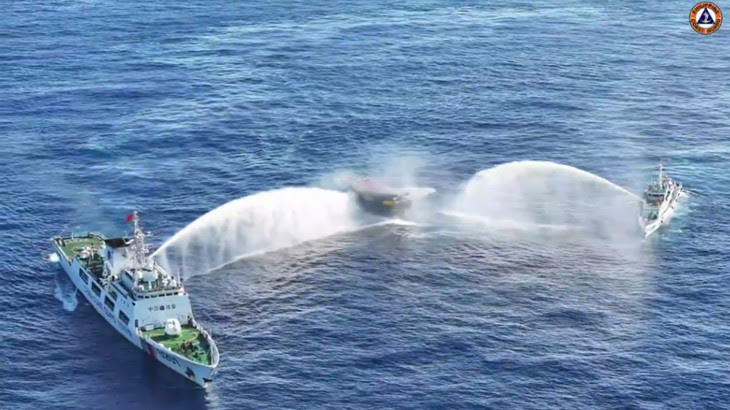
The Grey Zone is not just a strategy but a tool used by a country to build “advantages” without causing escalation that could trigger direct war. In the context of China, this strategy is useful for forcing other countries to slowly accept changes to the status quo. This approach is in line with the concept of coercive diplomacy, which asserts that limited pressure can force other parties to change their position without military confrontation. China understands that war is a very costly option from both an economic and military perspective. Therefore, the use of coast guards, maritime militias, and civilian survey ships is a far more effective alternative for achieving its strategic objectives. China’s two main instruments, the China Coast Guard (CCG) and the People’s Armed Forces Maritime Militia (PAFMM), are the spearheads of operations below the threshold of war. Both are equipped with weapons such as large ships, modern radar, and even lasers or water cannons but remain under the narrative of “law enforcement.”

Since 2013, the presence of CCG and PAFMM ships around the Spratlys and Paracels has increased, especially after China accelerated the construction of artificial islands. This is part of a “salami slicing” pattern that narrows the space for other countries to maneuver through small but gradual steps. In some cases, these vessels have engaged in dangerous maneuvers against Philippine, Vietnamese, and Malaysian ships by blocking supply vessels, chasing fishing boats, and even directing laser beams at other vessels to disrupt their observations. These actions are designed to be aggressive enough to assert control but not so provocative as to trigger military intervention from the United States or other regional allies. From a coercive diplomacy perspective, China is pursuing a strategy of gradualism, applying steady pressure that forces smaller countries to reconsider whether resistance is worth the cost. The Philippines has experienced water cannon incidents many times, but each incident has only resulted in diplomatic protests rather than a change in the balance of power on the field.

One of the most prominent aspects of China’s strategy is its use of legal narratives. China frames almost every incident as a professional and legitimate action by its coast guard to protect its national territory. These narratives are not mere rhetoric but part of China’s three-pronged warfare strategy, which is public opinion warfare, psychological warfare, and legal warfare.

In the South China Sea, the dispute over these small islands is not merely about territorial claims; rather, the region is of paramount strategic and economic importance because more than one-third of global maritime trade passes through it, making it a vital trade route. Control over this route could increase China’s economic and geopolitical leverage. Furthermore, the region is rich in natural resources such as oil and gas reserves, which will certainly help to fulfill China’s future energy needs. Furthermore, China is also seeking to expand its influence in the Indo-Pacific region and position itself as a major maritime power, thereby reducing the role of the United States. These strategic needs are the reason why it will be very difficult for China to relax its grey zone approach, as this strategy is an instrument that can change the status quo without incurring too great a cost to its reputation.


Looking at the responses of ASEAN countries, their responses are not entirely the same even though they are all affected. The Philippines has been the most vocal, especially since the laser incident involving their patrol boat. Vietnam has also strengthened its navy, while Malaysia tends to remain silent but strengthen its closed diplomacy. In this case, China’s strategy works because the parties under pressure do not have the capacity to respond in a balanced manner. Most of these ASEAN countries cannot provide punishment deterrence, so they can only rely on denial deterrence, which strengthens their ability to defend themselves and reduces the effectiveness of China’s pressure. On the other hand, the United States is trying to provide security guarantees through “Freedom of Navigation” operations, but these are more responsive than preventive. The uncertainty of these small countries means that China does not want to miss this golden opportunity to expand its sphere of influence.

Then, legally and militarily, China’s Grey Zone strategy is difficult to counter. Simply, there is no involvement of weapons in this strategy, and the actions of the CCG and PAFMM are difficult to categorize as use of force under international law. Second, coast guards and maritime militias are not included in the armed forces, which means they operate in a legal gray area. Finally, if the attacking vessels are fishing boats that have undergone modification, it is difficult for the targeted country to prove that they are part of a state operation. Broadly speaking, the more ambiguous China’s actions are, the more room they have to change the maritime reality without triggering open conflict.

However, this strategy could inadvertently trigger a major conflict. This can be seen from the large Chinese coast guard ships that can easily ram other ships, causing casualties and triggering escalation. The Grey Zone only works as long as all parties can restrain themselves, but if one party is cornered and loses control, escalation could very likely occur within hours.

In this situation, China’s Grey Zone in the South China Sea poses a serious threat to regional stability. This strategy creates pressure without war but can significantly change the political and legal reality by exploiting legal loopholes, power imbalances, and narrative ambiguities. Countries in the region must build more effective security mechanisms that go beyond military buildup to include coast guard coordination mechanisms, maritime incident protocols, enhanced technological capabilities, and more aggressive international legal diplomacy.

This argument underscores that without innovation in defense approaches, the region will continue to be mired in uncertainty, and China’s Grey Zone strategy will become increasingly effective year after year. Ultimately, regional stability requires legal clarity, a balance of power, and the ability of countries to resist pressure that moves silently, rather than relying solely on the absence of war.

Friday, September 12, 2025

Why is China setting up a nature reserve in one of the world’s most contested waterways?

Why is China setting up a nature reserve in one of the world’s most contested waterways?

China’s latest nature reserve is a rock in the middle of one of the world’s most contested waterways.

On Wednesday, the Chinese government approved a proposal to establish a national nature reserve at Scarborough Shoal, a hotly contested reef in the South China Sea, in an unprecedented move that has ignited a fresh war of words with rival claimant the Philippines.

The reserve will cover more than 3,500 hectares at Huangyan Island, the Chinese name for Scarborough Shoal, with its coral reef ecosystem as the main protection target, according to China’s National Forestry and Grassland Administration.

The move has drawn strong protest from the Philippines and marks a new step in China’s effort to reinforce its territorial claims in the South China Sea, a strategic, resource-rich waterway through which more than 60 percent of global maritime trade transits.

China claims almost the entire South China Sea, including features hundreds of miles from its mainland, despite a 2016 international ruling against its claim.

The Philippines will issue a formal diplomatic protest over the reserve, its foreign ministry said in a statement Thursday, calling China’s action “illegitimate and unlawful” and accusing it of infringing on Manila’s rights and interests.

It said the Philippines has sovereignty and jurisdiction over the shoal, which it calls Bajo de Masinloc, describing it as a “longstanding and integral part” of the Philippines.

China’s foreign ministry hit back, saying it rejects the Philippines’ “groundless accusations and so-called protests” and urges it to stop its “provocations and hype.”

Located 200 km (124 miles) off the Philippines, the Scarborough Shoal lies within the Philippines’ exclusive economic zone and has long been a flashpoint between Beijing and Manila. The triangular chain of reefs and rocks is coveted for its strategic location, bountiful fish stocks, and role as a sanctuary for boats during storms.

China seized the uninhabited atoll – 870 km (540 miles) from its southernmost province of Hainan – in 2012 after a long standoff with the Philippine Navy, and has maintained an almost constant coast guard presence in nearby waters since. It has ramped up patrols in recent years, blocking Philippine fishermen from their traditional fishing grounds.

Tensions came to a head in August, when a Chinese navy destroyer dramatically collided with a China Coast Guard ship and badly damaged its bow while chasing a Philippine patrol vessel near Scarborough Shoal – a collision that highlighted the danger of the increasingly frequent and violent clashes between the two sides.

The Philippines is a mutual defense ally of the United States, meaning serious clashes between Beijing and Manila could quickly spiral into something that drags the US military into the fray.

In a statement, China’s cabinet, the State Council, called the establishment of the nature reserve “an important guarantee for maintaining the diversity, stability and sustainability of Huangyan Island’s natural ecosystem.” It also called for stronger enforcement against “illegal activities” at the reserve.

Chinese experts have hailed the move as an important step in defending China’s territorial sovereignty and signaled it could set a precedent for other maritime features in the South China Sea, according to state media reports.

A map released by the Chinese government shows the entire northeastern rim of the atoll designated as the reserve, which consists of a “core zone” flanked by two “experimental zones.”

Under Chinese law, a core zone is strictly off limits, while an experimental zone allows scientific research, educational activities as well as tourism. Construction is forbidden in core zones but allowed in experimental zones. Foreigners must obtain approval from Chinese authorities to enter any reserve.

Ding Duo, a researcher at the National Institute for South China Sea Studies, told the state-run Global Times that the decision to establish a nature reserve is a “strong rebuttal” to accusations that China has damaged the marine environment of the South China Sea.

China’s narrative that it plans to protect fragile ecosystems in the South China Sea will likely raise eyebrows among neighbors and conservationists given Beijing’s years of island building across the disputed waters have caused significant environmental damage.

Philippine National Security Adviser Eduardo Año said China’s move is “less about protecting the environment and more about justifying its control” over the maritime feature.

“The irony is clear: since 2016, evidence has shown large-scale harvesting of endangered species and reef destruction by Chinese fishermen,” he said in a statement. “To now claim stewardship over an ecosystem that they themselves has damaged is both contradictory and misleading.”

A 2023 report by the Center for Strategic and International Studies (CSIS) said China had buried roughly 4,648 acres of reefs through dredging and land fill to build artificial islands. In addition, Chinese giant clam harvesting damaged an estimated 16,353 acres of coral reef, the report said.

Much of the Chinese construction centered on the Paracel Islands and the Spratly Islands, and China has not built any facilities on Scarborough Shoal, according to CSIS.

The Philippines has also accused China’s shadowy maritime militia of destroying coral reefs in the South China Sea. China has rejected the accusation and accused the Philippines of damaging the coral reef ecosystem in the waterway instead.

Wednesday, September 3, 2025

ASEAN at a Crossroads: Unity or Fragmentation in the South China Sea Dispute

ASEAN at a Crossroads: Unity or Fragmentation in the South China Sea Dispute

ASEAN currently stands at a decisive crossroads. On one side, the region faces intensifying external pressure from great-power rivalry in the South China Sea. On the other, it remains burdened by unresolved internal problems: the border conflict between Cambodia and Thailand, the humanitarian crisis of the Rohingya in Myanmar, and the maritime dispute over the Ambalat Block between Indonesia and Malaysia.


Reaching a common perception among ASEAN states on the South China Sea has become an urgent necessity to address external challenges and demonstrate the bloc’s capacity to resolve internal conflicts through dialogue and peaceful settlement.

External powers shaping ASEAN’s dynamics.

The South China Sea is a vital international trade artery worth over US$3 trillion annually, and equally rich in energy and natural resources. China’s sweeping “nine-dash line” claim, struck down by the Permanent Court of Arbitration in 2016, remains rejected by Beijing, fueling ongoing tensions. Since 2002, ASEAN and China have been negotiating a Code of Conduct (COC), yet progress has been painstakingly slow. Disagreements over scope and legal standing remain unresolved. Meanwhile, aggressive maneuvers at sea, such as “ramming” incidents and harassment of Philippine vessels by Chinese coast guard ships, have created tangible risks of escalation. In a recent development, a U.S. destroyer was forced out of the Scarborough Shoal area following a confrontation with Chinese patrols, underlining the volatile and layered tensions in these contested waters.


Competition for influence in Southeast Asia has also intensified with the entry of European actors, particularly France, which has sought to expand its strategic footprint by offering economic, technological, and defence benefits. Indonesia’s multi-billion-dollar purchase of French Rafale fighter jets illustrates this shift. For Jakarta, the deal is not only about modernising its military arsenal but also about broadening strategic partnerships and diversifying security support beyond the traditional poles of the United States and China. France’s presence highlights a new layer of geopolitical rivalry in ASEAN, where member states must carefully balance short-term benefits with long-term consistency in upholding collective principles.

Without a unified stance, ASEAN risks losing momentum in shaping the narrative and outcome of this dispute, as well as those to come.


The necessity of collaboration

A shared ASEAN perception would strengthen collective legitimacy in upholding UNCLOS and the arbitral ruling. By speaking with one voice, the bloc would enhance its moral and political leverage in pressing parties to respect international law. This cohesion is not only about legal principle but also about preventing dangerous miscalculations that could spiral into armed confrontation.


A significant moment in regional security cooperation occurred when the Philippines and India held their first-ever joint naval exercise in the South China Sea, signalling a collective effort to uphold maritime sovereignty and international law through security partnerships. Similarly, Exercise “Alon 25” involving Australia, the United States, Canada, and the Philippines, took place near Scarborough Shoal, symbolising collective deterrence against unilateral aggression.


The Ambalat dispute: a framework for diplomatic cooperation

In the broader context of peaceful resolution, the dispute over the Ambalat block between Indonesia and Malaysia offers a valuable lesson. While both nations lay claim to the resource-rich territory, Indonesian President Prabowo Subianto and Malaysian Prime Minister Anwar Ibrahim have openly committed to resolving differences through dialogue and peaceful means. This bilateral understanding demonstrates that when there is political will at the highest level, potential disputes can be contained without sacrificing bilateral ties. Nations, particularly in the ASEAN region, should look to Ambalat as a concrete precedent that a peaceful resolution is both possible and practical. Such a framework could be used in Myanmar’s Rohingya crisis and the Cambodia–Thailand border tensions, or the broader South China Sea issue. Nevertheless, the challenges to consensus remain formidable. National interests vary widely. The Philippines and Vietnam are taking a more assertive stance against China, while Malaysia has opted for pragmatism to preserve its economic ties. The absence of a shared spirit has often been evident in ASEAN’s reluctance to issue strong collective statements at international forums. Meanwhile, Philippine officials have stressed that Beijing must address the “trust deficit” caused by its aggressive actions at sea while also warning that diplomacy alone is insufficient without credible deterrence measures.


The path forward

Moving forward, ASEAN must take several critical steps. First, it should formulate a binding consensus that commits all members to international law, including the recognition of UNCLOS, the renunciation of force, and strong support for accelerating the COC negotiations. Second, ASEAN needs to institutionalise platforms for discussing not only the South China Sea but also other pressing issues—such as Myanmar, Ambalat, and the Cambodia–Thailand border—so that peaceful resolution becomes a norm, not an exception. Finally, the bloc must strengthen transparency and crisis management mechanisms, such as coast guard dialogues or hotlines, to reduce the risk of miscalculation.

ASEAN’s relevance in the eyes of the world depends on its ability to speak with one voice. The South China Sea is the stage upon which this credibility will be tested. Suppose ASEAN can transcend its internal differences and unify around the principles of international law. In that case, it will enhance its bargaining power with both Beijing and Washington, while preserving the integrity of the regional order. Success in forging a common stance on the South China Sea will create momentum for resolving Ambalat peacefully, reviving dialogue on Myanmar, and providing a model for Cambodia and Thailand. Failure, however, risks further fragmentation, diminished global credibility, and an ASEAN that drifts toward irrelevance. The choice before the bloc is stark yet simple: unify perceptions, or succumb to fragility.

Saturday, April 19, 2025

China Plays South China Sea-Style “Salami Slicing” Tricks In The Yellow Sea; What’s Cooking In Indo-Pacific?

China Plays South China Sea-Style “Salami Slicing” Tricks In The Yellow Sea; What’s Cooking In Indo-Pacific?

After aggressive posturing in the South China Sea, China is upping the ante in the Yellow Sea, following the building of a gigantic steel rig.

This has been a bone of contention between South Korea and China. The Coast Guards of the two countries recently had a standoff after Korean ships wanted to investigate the steel structure.

South Korean news agency Yonhap quoted diplomatic sources as saying that the two coast guards had engaged in a two-hour-long standoff. The confrontation took place on the afternoon of February 26 in the Provisional Maritime Zone (PMZ) near Socotra Rock, southwest of South Korea’s Jeju Island.

The PMZ is a jointly managed stretch of the Yellow Sea, also known in Korea as the West Sea, where the exclusive economic zones (EEZs) of China and South Korea overlap.

In an uncanny similarity to its strategy against the Philippines Coast Guard, the Chinese coast guard vessels and civilian boats blocked the South Korean research ship Onnuri, which was there at the behest of the South Korean government to conduct a survey of the structure.

According to South Korean media, in response, Seoul dispatched a coast guard vessel to the scene, resulting in a two-hour standoff. South Korea contended its inspection was legitimate, whereas the Chinese side claimed that the structure was an aquafarm and asked the Korean vessel to leave.


South Korea had reportedly summoned an official from the Chinese Embassy in Seoul to lodge a protest over the incident.

Latest satellite images indicate that China has installed several large steel platforms in the PMZ. The PMZ was established under a 2000 agreement, which allows fishing and navigation in the disputed region until the maritime boundary issue is resolved.

This differs from the EEZ, which extends 200 nautical miles from the coast and grants the claimant country exclusive rights to access its underwater resources and fishing grounds, as per international maritime law.

Shen Lan 2 Hao (or Deep Blue 2) is a 71.5-meter-tall underwater marine cage deployed by China into the PMZ for salmon aquaculture. The massive cage and the jack-up support rig sparked concern in South Korea. The Korean government asserts its right to inspect the structure under the 2001 Korea-China Fisheries Agreement.

South Korea alleges that the structure was placed without prior notification or consent. On earlier occasions, China had installed platforms in the region, only to have them removed following protests from Seoul. However, the latest installation, featuring three long legs that can be lowered to the sea floor for stability, signals China’s beefing up of its presence in the region.

Move To Grab Territory?

The overlapping areas of EEZs between China and South Korea in the Yellow Sea are believed to be rich in natural resources, including oil. In pursuance of cementing its claims, China has been installing artificial structures.

Ray Powell, the Director of SeaLight and Project Lead for Project Myoushu at Stanford University’s Gordian Knot Center for National Security Innovation, examined the images from Planet Labs. According to him, the rig measures approximately 108 meters long (from helipad to its opposite tower) and 82 meters broad.

Based on SeaLight’s analysis, “this rig was first deployed in October 2022. The new rig replaced a smaller rig that was sent out at least two years before to join Shen Lan 2 Hao’s own smaller predecessor, Shen Lan 1 Hao, which was first deployed in 2018 to much fanfare.”

Sealight analysis sheds light on the impasse in the East China Sea. The Qingdao-based China Coast Guard (CCG) 6402, along with the patrolling CCG 6305 and three civilian-crewed rubber boats, blocked the path of the Korean research vessel. Chinese civilians aboard the rubber boats were reportedly armed with knives and shouted demands to leave.

China claims Shen Lan 2 Hao heralds a new era in sustainable aquaculture. It is operated by the state-backed Shandong Marine Group and features automated feeding systems, underwater imaging, and remote-control capabilities, enabling salmon farming in 9,000 cubic meters of caged water. Disregarding the 2001 agreement, Beijing claims the structure is located within its Exclusive Economic Zone (EEZ).

However, the Socotra Rock, known as Ieodo in South Korea and Suyan Islet in China, where the standoff took place, is a submerged rock formation that falls within the overlapping EEZ claims between the two countries. In fact, in 2003, when South Korea set up the Ieodo Ocean Research Centre, Beijing described the move as “unilateral” and “illegal.”

According to Powell, “A more cynical view is that this is an early step in bringing a South China Sea-style gray zone campaign of ‘salami slicing’ to the Yellow Sea. In this view, the incremental deployment of rigs of increasing size into the PMZ reflects a recognizable pattern of testing rival states’ resolve with ostensibly civilian and coast guard presence while avoiding overt militarization.”

The former USAF veteran, Powell, contends that China’s civil-military fusion keeps the door open for non-salmon harvesting activities, such as intelligence collection, close to its giant support rig. There is no difference between the Chinese Navy, Coast Guard, and militia. It is all under the aegis of national maritime security. They just have different roles. It is a ‘might be the right’ kind of setup. That is why like-minded countries are coming together to establish a rule-based order.

China’s distant-water fishing fleet has been suspected of intelligence gathering and is the vanguard of China’s “Gray Zone Tactics.”

Friday, March 14, 2025

Beijing Treads Water in the South China Sea

Beijing Treads Water in the South China Sea


2024 brought increased tensions between China and Southeast Asian nations over South China Sea disputes. China continued down the same dangerous but ultimately ineffective path it has walked since 2022, failing to make and consolidate gains in the region.

Beijing modestly increased the intensity of China Coast Guard (CCG) patrols in the exclusive economic zones of Indonesia, Malaysia, the Philippines and Vietnam. It also employed new and more frequent forms of grey zone violence, particularly against the Philippines. In the face of this pressure, Southeast Asian claimants made modest gains while Beijing failed in both its tactical and strategic aims.

Tensions between China and the Philippines at Second Thomas Shoal posed a dangerous risk of escalation. The Philippines maintains a tenuous military base at the shoal via the grounded BRP Sierra Madre. The 2016 Permanent Court of Arbitration award ruled that the shoal is part of the Philippine exclusive economic zone, but China still claims it.

CCG and militia ships blockaded Philippine resupply missions to the Sierra Madre in 2023 and early 2024. This was an attempt to prevent the Philippines from delivering construction materials to repair the ship.

The CCG and militia presence around Second Thomas Shoal remained elevated in the first six months of 2024. They changed their tactics to more aggressively damage Philippine vessels, leading to multiple injuries to Filipino personnel and a growing anxiety that an accidental fatality might trigger US defence obligations under the US–Philippines Mutual Defense Treaty.

This came to a head on 17 June 2024 when the Philippines was unable to complete a resupply mission due to CCG personnel ramming and boarding Philippine vessels while armed with knives and other weapons. A Filipino sailor had his thumb severed during the clash, and it took hours for China to allow his evacuation.

The tone of US–China and Philippines–China meetings shifted as Beijing seemed concerned that the incident came close to triggering US intervention due to the near death of a Filipino sailor.

The Philippines was willing to cut a deal to return to the status quo ante, having sufficiently repaired the Sierra Madre. Manila had achieved its tactical aim, while Beijing had not. At the next Bilateral Consultative Mechanism between Manila and Beijing, the two sides reached a provisional agreement — the Philippines would bring only necessary supplies to the Sierra Madre, and China would end the blockade. The deal has held, though violence and collisions continue at other sites, particularly Sabina and Scarborough Shoals.

Farther south, Indonesia and Malaysia faced an increased number of CCG vessels in their waters harassing oil and gas operations. A diplomatic letter leaked in September 2024 revealed China had pressured Malaysia to halt oil and gas exploration near Luconia Shoals. This was not mere rhetoric — for the first time, at least one CCG vessel patrolled Malaysian waters around Luconia Shoals every day of the year.

China also challenged a seismic survey in Indonesia’s Natuna D-Alpha gas field conducted by PT Pertamina. During a three-week standoff between CCG, Indonesian law enforcement and naval vessels in October 2024, Indonesia publicly released photos and footage of China’s harassment. Despite Chinese operations, Malaysia drilled 15 new exploratory wells off Sarawak in 2024 and Indonesia completed its survey operations — another tactical success by Southeast Asian claimants standing up to grey zone pressure.

China also failed to contain Vietnam’s operations — Vietnam undertook the most significant expansion of its outposts in a single year, focusing on Barque Canada Reef, now the fourth-largest outpost in the Spratly Islands. By mid-2024, Vietnam had created more than two-thirds as much land as China in the Spratlys and may match China’s acreage in 2025. Satellite imagery shows that while Vietnam is still building its second runway at Barque Canada Reef, Pearson Reef has been expanded to fit another runway.

While tensions and the risk of escalation reached a new high point in 2024, it is worth asking which claimants, if any, improved their positions. The Philippines repaired the Sierra Madre while barely avoiding a major escalation. It instrumentalised the violence it faced to persuade 27 countries, plus the European Union, to call for Beijing to comply with the 2016 arbitral award.

On the ground, the Philippines modernised its alliance with the United States, signed a major new Reciprocal Access Agreement with Japan, and deepened defence ties with other partners, including Australia, Germany, France, New Zealand, South Korea and Vietnam. This is a major strategic setback for Beijing and is far more costly than its tactical failure to prevent repairs to the Sierra Madre.

Vietnam built out its islands and began constructing dual-use infrastructure without facing significant costs from Beijing. Indonesia successfully surveyed the Natuna D-Alpha field, while Malaysia developed more oil and gas projects in the South China Sea in 2024 than in any previous year.

In contrast, China controlled no more water or airspace on 31 December 2024 than on 1 January. It had not stopped a single major oil and gas project and was unable to attain its most public goal — preventing the Philippines from delivering construction materials to repair the Sierra Madre. It also pushed the Philippines deeper into the emerging alliance network that Beijing insists is contrary to its own strategic interests.

If China pursues the same tactics in 2025, it is likely to get the same results — no tactical gain, further deterioration of the regional strategic environment and an unacceptably high risk of accidental escalation.

Gregory Poling is Senior Fellow and Director of the Southeast Asia Program and the Asia Maritime Transparency Initiative at the Center for Strategic and International Studies (CSIS), Washington DC.

Monica Michiko Sato is Research Associate of the Asia Maritime Security Initiative (AMTI) at the Center for Strategic and International Studies (CSIS), Washington, D.C.

Sunday, March 2, 2025

 China Main Culprit in South China Sea Marine Habitat Destruction

China Main Culprit in South China Sea Marine Habitat Destruction

 China Main Culprit in South China Sea Marine Habitat Destruction


China's artificial island-building activities are responsible for approximately two-thirds of marine habitat destruction caused by dredge-and-fill construction in the South China Sea, according to recent research.

Since 2013, China has buried over 4,600 acres (around 19 square kilometers) of coral reefs, as reported by the Asia Maritime Transparency Initiative (AMTI) in January 2025. AMTI, a project under the U.S.-based think tank Center for Strategic and International Studies (CSIS), analyzed satellite imagery and concluded that China accounted for 65% of the total 8,000 acres of coral reef damage.

The report highlighted that these artificial island-building projects result in irreversible and long-term impacts on the reef's structure and overall ecological health.

AMTI researchers examined coral reef destruction caused by various claimants in the South China Sea—including Malaysia, the Philippines, Taiwan, and Vietnam—and identified China as the primary offender. China's expansive territorial claims over nearly all of this strategic waterway disregard a 2016 international tribunal ruling that invalidated its claims.

The December 2023 AMTI report titled "Deep Blue Scars: Environmental Threats to the South China Sea" detailed China's destructive dredging methods. Chinese cutter suction dredgers cut into reefs and pumped sediment through pipelines to shallow areas, creating landfill. This process disturbed seabed habitats and generated abrasive sediment clouds that killed marine life and overwhelmed coral reefs' natural recovery capabilities.

Moreover, Chinese vessels harvesting giant clams have damaged an additional 16,353 acres (66 square kilometers) of coral reef. The harvested clam shells are carved into jewelry or statues sold in China. Fishermen employ a particularly harmful technique involving specially designed brass propellers dragged across reefs to facilitate clam collection.

This latest report coincides with the Philippines' consideration of initiating another arbitration case against China for ongoing violations of the United Nations Convention on the Law of the Sea (UNCLOS). Manila previously initiated arbitration proceedings leading to the 2016 ruling against China's claims and has expressed hope that other nations might join a potential multilateral legal action.

The 2016 tribunal ruling found China's artificial island-building at seven reefs breached six UNCLOS obligations, including responsibilities to protect marine environments, reduce pollution, and cooperate in managing marine resources sustainably.

A new arbitration case could involve similar environmental allegations. Previously, the Philippines called for an international investigation into environmental damage caused by giant clam harvesting at a disputed shoal in the South China Sea. Additionally, Manila may pursue a nonbinding UN resolution to seek an advisory opinion from the International Court of Justice (ICJ), according to AMTI Director Gregory B. Poling.

During the UN General Assembly session in September 2024, the Philippines gathered senior officials from over 20 countries to demonstrate international solidarity against China's actions regarding South China Sea disputes. Poling emphasized that pursuing both legal and diplomatic measures would mutually reinforce each other, expanding Manila's options for arbitration through greater engagement with UN mechanisms.

Sunday, January 19, 2025

Asean maritime pacts ‘can boost talks on South China Sea code’

Asean maritime pacts ‘can boost talks on South China Sea code’

 The Philippines’ foreign secretary says efforts among Asean members could bolster progress in negotiating a substantive code of conduct for the South China Sea.

Enhanced maritime cooperation among Asean members could help advance negotiations for a code of conduct in the South China Sea, says Philippine foreign secretary Enrique Manalo.

“We have the basic negotiations between the Asean countries and China, but this doesn’t prevent other countries from seeking maritime cooperative activities with each other, because that, too, will help, even with China,” he said.

“All of these could work and be supportive of the negotiations on the code,” he told FMT.

Manalo, who is in Langkawi for the Asean foreign ministers’ retreat, reiterated the Philippines’ full commitment to the COC negotiations, which began in 2018.

Talks about conduct guidelines began in the 1990s due to China’s assertive claims over much of the South China Sea.

He said critical issues must be dealt with urgently, such as whether the code of conduct would be legally binding, the scope of the code, and its alignment with international laws, particularly the United Nations convention on the law of the sea.

“It’s only in this way that we can really push and move the negotiations forward,” he said. “We can’t do that in an effective way unless we also start discussing the issues.”

Progress on the code has been lagging, while the Philippines, one of the frontline states, has been increasingly vocal about the importance of ensuring a substantive and legally binding agreement.

China’s claims over the South China Sea are disputed by the Philippines, Vietnam, and Malaysia.

Last month, Malaysia became the first Southeast Asian country to sign a comprehensive strategic partnership with Vietnam. It is believed that Indonesia and the Philippines may soon follow suit, as Asean members begin uniting more assertively against China’s claims.

Sunday, June 30, 2024

The giant and the archipelago: Chinese attack on the Second Thomas Shoal and its implications

The giant and the archipelago: Chinese attack on the Second Thomas Shoal and its implications

The latest clash between the Chinese Coast Guard (CCG) and the Filipino sailors in the South China Sea on June 17, is testament to the fact that China continues to threaten the region.


“The strong do what they have the power to do, and the weak accept what they have to accept.” This famous age-old aphorism by Thucydides could not be more true as is evident from the recent confrontation between China and the Philippines. Clashes between China and its neighbors over sovereignty, resources, and security in the South China Sea have been a common phenomena since the 1970s. A “semi-enclosed body of water stretching in a Southwest to Northeast direction” including more than 200 islands, the South China Sea has always been embroiled in conflicts regarding its jurisdiction. Starting from the Chinese attack on the forces of the Republic of Vietnam in the Paracel Islands in 1974 and Fiery Cross Reef in 1988 to China’s military ouster of the Philippines from Mischief Reef in 1995, tensions have been mounting with each passing incident. China’s turn in 2009 toward an assertive, even aggressive approach in its efforts to control U.S. naval activities in the South China Sea resulted in new American attention. China’s claim to a historic right to jurisdiction over the waters of the South China Sea is undermined by overlapping claims maintained by the Philippines, Vietnam, Malaysia, Brunei, and Indonesia as well as Taiwan. Thus it is proved that however long standing China’s claims of jurisdiction in the South China Sea may be, it is not exclusive or widely accepted by other states.

What exactly happened at the Second Thomas Shoal?

The latest clash between the Chinese Coast Guard (CCG) and the Filipino sailors in the South China Sea on June 17, is testament to the fact that China continues to threaten the region. The clash took place when Philippine forces attempted to resupply marines stationed on a derelict warship at the BRP Sierra Madre (LS57) at Ayungin Shoal (another name for the Second Thomas Shoal, a submerged reef in the Spratly Islands of the South China Sea) amid Beijing’s stepping up efforts to assert its claims to the disputed area. China allegedly attacked a Philippines marine vessel with ‘bladed weapons’. China has even been designated as ‘pirates’ by an army personnel of the Philippines. The Philippines’ Defense chief said China deliberately used “aggressive and illegal force” to disrupt a resupply mission in the South China Sea. This “brutal assault” in the South China Sea is a major escalation in a festering dispute that threatens to drag the United States into another global conflict. The incident is the latest in a series of increasingly fraught confrontations in the resource-rich and strategically important waterway as Beijing is stepping up its efforts to push its claims to nearly all of the strategically located waterway.

Prior to this, the 2012 Scarborough Shoal standoff between the Philippine and Chinese civilian vessels constitutes an arch-typical international incident. China targeted the Philippines in naval brinkmanship. The standoff began on April 8, 2012, when a Philippine Air Force (PAF) reconnaissance plane spotted eight Chinese fishing boats around the shoal. China gained the upper hand as it forced the Philippines to back away from confronting the Chinese civilian presence. China thus forced the Philippines to reconsider before using force to resolve a matter of maritime jurisdiction claiming that those Chinese vessels were ‘in the area fulfilling the duties of safeguarding Chinese maritime rights and interests.’ China also added that the Shoal is an integral part of Chinese territory.

China claims almost the entire South China Sea with its so-called nine-dash line, which overlaps the exclusive economic zones of rival claimants Brunei, Malaysia, Philippines, Taiwan and Vietnam. While the Scarborough Shoal lies within the Philippines’ Exclusive Economic Zone (EEZ), China argues its historical ties to the region, citing evidence of Chinese sailors visiting and mapping the shoal as far back as the Song Dynasty (960-1279 AD). In 2016, an international tribunal ruled largely in favor of the Philippines in its dispute with China over the Scarborough Shoal, stating that China’s actions violated international law. Despite the ruling, China rejected the tribunal’s authority and chose to ignore its decision. The scenes captured in the latest footage of the recent incident shows how China has adopted new and far more openly aggressive tactics that appear calculated to test how the Philippines and its key defense ally- the United States – will respond.

Implications of the incident and the role of the U.S.:

Whatever happens at the South China Sea has profound implications for the US, which has a mutual defense treaty with the Philippines that dates back decades. The United States has increased its military presence and naval activity in the region to counter China’s aggressive territorial claims and safeguard its own political and economic interests. Additionally the US has provided weapons and aid to nations opposing China’s territorial claims. The South China Sea is highly valuable for its substantial oil and natural gas reserves, rich fishing grounds and is also a major trade route. According to the United Nations Conference on Trade and Development, more than 21 percent of global trade, valued at $3.37 trillion, passes through these waters. Washington and Beijing are talking more regularly to avoid a conflict in the South China Sea despite their “contentious and competitive” relationship. The South China Sea has become a dangerous flash point, where Beijing’s claims are ratcheting up tensions with Taiwan and Philippines, as well as their most powerful ally, the US.

The Philippines is the United States’ oldest treaty ally in Asia and they share a mutual deep and long-standing political, economic, and social ties. On the domestic front, the Philippines has a democratic political system, and the U.S. security umbrella protects it from outside attack. Yet the country suffers from chronic political instability, which is manifested in periodic military rebellions and extralegal “people power” movements against incumbent governments. With its internal problems Manila has chosen to pursue a policy of leveraging its international relationships by seeking to regionalize the South China Sea dispute through ASEAN and by developing closer defense cooperation with the US. 

Conclusion

Amidst all the tension over disputed islands with the Philippines, the People’s Liberation Army has conducted drills in the South China Sea featuring landing ships. What we could make out of these ongoing incidents is that China, a major power, uses realpolitik to press its expansive claim in the South China Sea. On the other hand, the Philippines, a small power, adopts the liberal-legal approach that seeks to balance against China. Thus the potential for these kinds of hostilities will persist as long as China continues to increase its efforts to control the region and as other claimant countries, such as the Philippines and Vietnam, remain firm in asserting their right to control their respective claims in the South China Sea.


The Philippine submission: Third round of note-verbal battle?

The Philippine submission: Third round of note-verbal battle?

 The Philippines submitted an extended continental shelf claim in the East Sea 15 years after the deadline because the government under President Jr. Marcos is shifting its policy toward greater assertiveness and transparency in the region.

This move reflects a strategic change aimed at reinforcing the country's sovereignty and maritime rights amidst ongoing territorial disputes.

We respectfully introduce an article by Ambassador Nguyen Hong Thao, a Vietnamese diplomat and legal expert who has twice been a member of the International Law Commission of the United Nations, currently serving the term 2023-2027.


On 14 June 2024, the Philippines Permanent Mission in New York presented to the Commission on the Limits of the Continental Shelf (CLCS) a partial submission containing information on the outer limits of a portion of its continental shelf extending beyond 200 nautical miles from the baselines used to measure the breadth of the territorial sea.

This submission is in accordance with the 1982 United Nations Convention on the Law of the Sea (UNCLOS) and pertains to the West Palawan Region (WPR). The submission coincided with the final day of the 34th session of the States Parties to the Law of the Sea (SPLOS), marking the 30th anniversary of UNCLOS's entry into force.

UNCLOS stipulates that the deadline for the submission of information on the outer limits of the continental shelf to the CLCS was before 13 May 2009 (See SPLOS/72). In the East Sea (internationally known as the South China Sea), Indonesia lodged its submissions on the outer limits of the continental shelf beyond 200 nm in the northwest area of Sumatra Island to the CLCS on 16 June 2008; Viet Nam's partial submission in the northern area of the East Sea (VN-N) on 6 May 2009; the joint submission from Malaysia and Viet Nam on 7 May 2009; and Malaysia's partial submission on 12 December 2019.

The Philippines submitted its first partial submission on the outer limits of its continental shelf outside the East Sea in the Benham Rise Region on 8 April 2009, which was favorably acted upon by the CLCS in its Recommendation issued on 12 April 2012. As a member state of UNCLOS, the Philippines has the right to implement Article 76 of the Convention and Annex I of the Rules of Procedure of the CLCS (CLCS/40, Rev. 1) for the extended continental shelf if the geographical and geological structures of the shelf meet the legal requirements. The Philippines has the right to have new submissions because it has provided the preliminary information before the deadline. 

Why has the Philippines submitted its extended continental shelf file in the East Sea 15 years after the Convention's deadline?

The answer can only come from the Philippine administration under the Marcos’ presidency, which has pursued a shift to a more pronounced transparency policy on the South China Sea. The Philippines’ submissions would have some calculations.

Firstly, the Marcos administration would aim to assert the validity of the Tribunal Award of 12 July 2016 on the Philippines vs. China case, which allows for the expansion of the continental shelf from the mainland while confining the maritime features in the Spratlys each to a maximum of 12 nautical miles of territorial waters.

Secondly, the submission would be designed to reject the validity of China's nine-dash line claim.

Thirdly, Manila would affirm the validity of the Philippines' archipelagic baseline of 2012, which has been revised to align more closely with UNCLOS by excluding the Kalayaan Area from the scope of an archipelagic state.

Fourthly, it would consider the possibility of invoking Article 5 of the 1951 Mutual Defense Treaty (MDT), in which the US is obligated to protect Philippine armed forces, public vessels, aircraft (including those of its coast guard) from armed attack in the East Sea. U.S. Secretary of State Antony Blinken on 19 June 2024 spoke with Philippine Foreign Affairs Secretary Enrique A. Manalo about China's actions against the Philippines in the East Sea "undermine regional peace and stability and underscored the United States.”

Fifthly, it would give facilitation to the stalled negotiations on the Code of Conduct (COC). Last but not least, the move would leverage the presence of the Philippine member in the CLCS. Mr. Efren Perez Carandang, a member of the Commission for the term 2023-2028, was acknowledged for providing advice in the preparation of this submission.

The Philippines' submission may encounter several challenges.

First, the seabed geological conditions of the archipelagic state are unfavorable for defining the extension beyond its territorial sea 'throughout the natural prolongation of its land territory to the outer edge of the continental margin,' due to the presence of the Palawan Trench, which creates a disruption.

This may be why the Philippines has opted to use the method of drawing arcs not exceeding 60 nautical miles from the foot of the slope (FOS) point, in accordance with Paragraph 4(a)(ii) of Article 76, instead of the formula based on percentage of sediment thickness.

The submission acknowledges that this formula was not utilized due to insufficient sediment thickness data in the West Palawan Region (WPR).

Second, the southern part of the submission extends from the Sabah, which is subject to a sovereignty dispute with Malaysia and the Vietnam-Malaysia joint submission.

Third, the submission may potentially overlap with Vietnam's submission in the central region, where Vietnam declared the reservation of its sovereign rights in opposition to Malaysia's extended continental shelf in December 2019.

Fourth, the dispute over the sovereignty of the Spratly features remains unresolved, raising the question of maritime delimitation of the sea-bed of territorial seas of those features with the Philippine's continental shelf claims.  

Fifth, combining unilateral continental shelf claims with the 2016 ruling on a 12-nautical-mile territorial sea for features in the Spratly suggests that the East Sea may have high seas but lacks a seabed area designated as the common heritage of mankind. This situation poses challenges in establishing an appropriate marine management regime given the differing status of maritime zones.


The bright spot in the Philippines' submission is its acknowledgment of the existence of previous submissions by Vietnam and Malaysia, rather than rejecting them, and its willingness to discuss the delimitation of maritime boundaries with the relevant states. The submission has not named China for negotiations on the continental shelf.

The reactions of the interested states would be drastic. Malaysia maintains its claim to Sabah. Its note verbale on 27 June 20224 recalled that “The state of Sabah has and always been an integral part of Malaysia and has been recognized by the United Nations and the international community, as part of Malaysia, since the formation of the Federation of Malaysia on 16 September 1963.

The Republic of the Philippines claims sovereignty over Sabah is incompatible with its erga omnes obligation to recognise and uphold the legitimate exercise of the right of self – determination by the people of Sabah in 1963. Thus, it is clear that the Republic of the Philippines’ claim to Sabah has no basic whatsoever under international law”.   

China submitted preliminary survey findings on the outer limits of its continental shelf in the East China Sea to the Commission on the Limits of the Continental Shelf (CLCS) on 11 May 2009. However, in the East Sea, China has not shown an intention to claim an extended continental shelf. This stance could be explained by its expansive nine-dash line and Nanhai Zhudao, which would cover almost all the waters and seabed of the East Sea.

On 17 June 2024, China warned that “The Philippines’ unilateral submission on the extent of its undersea shelf in the East Sea infringes on China’s sovereign rights and jurisdiction, violates international law, including the United Nations Convention on the Law of the Sea (UNCLOS), and goes against the Declaration on the Conduct of Parties in the East Sea.”

On the same day, clashes occurred between Philippine supply vessels and Chinese Coast Guard ships around the Second Thomas Shoal. A day later, on 18 June 2024, the Chinese note verbale consisted on the indisputable sovereignty over Nanhai Zhudao and the adjacent waters and it enjoys sovereign rights and jurisdiction over the relevant waters as well as the seabed and subsoil thereof.

On 20 June 2024, Vietnam declared that it reserves all its rights and interests under international law, especially UNCLOS 1982, and expressed its readiness to discuss with the Philippines to find and reach a solution that aligns with the interests of both countries.

Vietnam's reaction is likely to be more subdued, because its position is to grant the features in the Spratly Islands only a 12-mile territorial sea. Other overlapping continental shelf claims are not related to unresolved sovereignty issues. For that reason, the submission would signal the beginning of the third round of the note verbale battle of which the first and second rounds arose after 2009 and 2019 submissions respectively.

The maritime limits, including the overlapping outer limits of the continental shelf in the East Sea, with distances between opposite coasts of no more than 700 nautical miles, need to be agreed upon by the countries involved and are not under the jurisdiction of the CLCS.

In the immediate future, the Philippines may consider a  withdrawal from its objection to the Vietnam-Malaysia joint submission and negotiation with these two countries to find an acceptable solution.